



As Seen on "The American Revolution"
Learn more about the stories featured in "The American Revolution" at the Museum, online and in our galleries. The documentary aired on PBS, Nov. 16–21, 2025.
Episode One: In Order to Be Free (May 1754 – May 1775)
Tensions escalate between the American colonists and the British government, leading to the first battle of the Revolution at Lexington and Concord.

The Road to Independence
Core ExhibitionHow did people become Revolutionaries? Discover how the American colonists – most of them content and even proud British subjects – became Revolutionaries as the roots of rebellion took hold in the Museum's core galleries.

Season of Independence
Trace the spread of American support for Independence and learn the perspectives of real men and women on all sides of the debate.

Phillis Wheatley's Poetry
Poems on Various Subjects, Religious and Moral, written by Phillis Wheatley, the first published African American woman poet, was lauded in both Europe and the American colonies as an example of the artistic and intellectual equality of people of African descent.
Episode Two: An Asylum for Mankind (May 1775 – July 1776)
Americans find themselves deeply divided as the war continues and George Washington takes command of the Continental Army. The Declaration of Independence is issued, asserting the colonists' right to govern.

The Declaration's Journey
Through Jan. 3, 2027The Declaration's Journey, presented by Griffin Catalyst, explores the history and global impact of the Declaration of Independence from 1776 to today and showcases how it has become one of the most influential political documents in modern history.
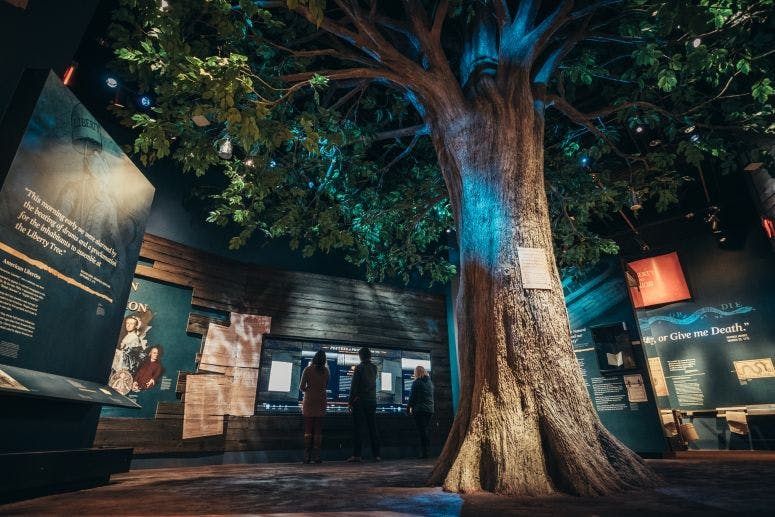
Timeline of the American Revolution
Using a mixture of historical objects, artifacts, and documents all drawn from the Museum’s collection, this Anthem Award-winning multimedia timeline explores both key moments and surprising stories of the American Revolution.
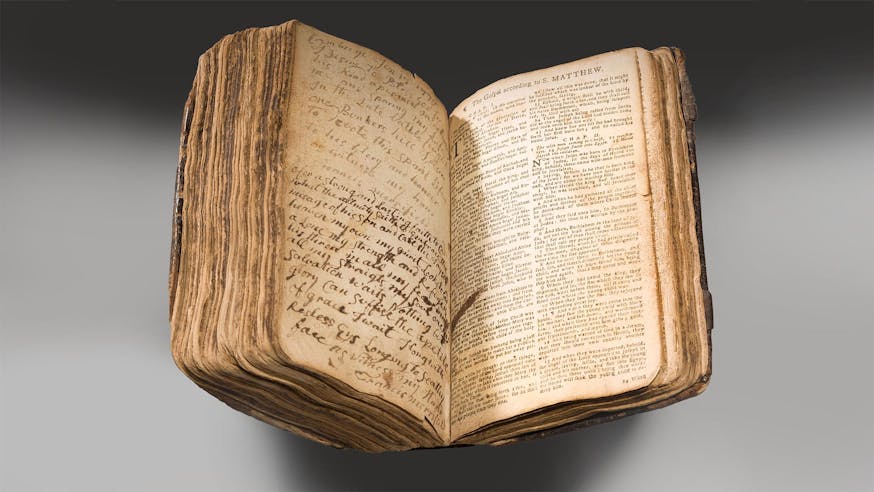
Bunker Hill Bible
Soldier Francis Merrifield of Ipswich, Massachusetts, inscribed a note in this Bible after surviving the Battle of Bunker Hill.
Episode Three: The Times That Try Men’s Souls (July 1776 – January 1777)
American colonists face serious challenges and defeats as the war continues, but Washington's army rallies in preparation for an attack on Trenton, New Jersey.
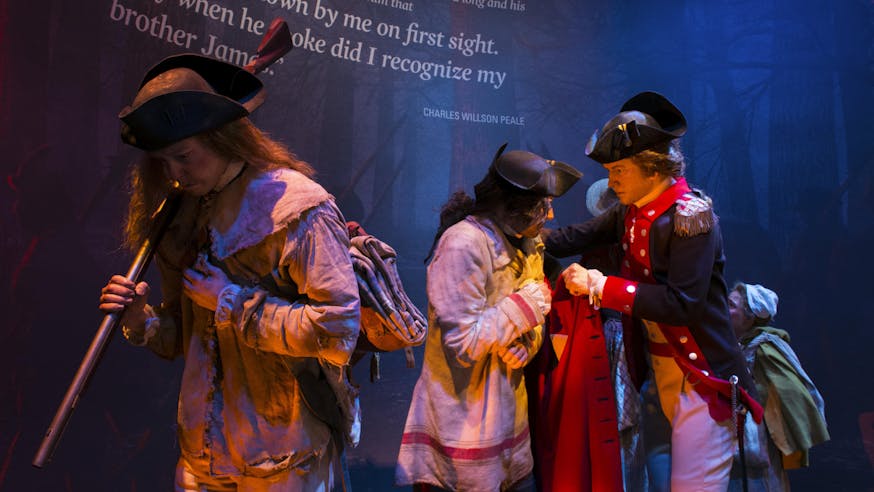
The Darkest Hour
Core ExhibitionHow did the Revolution survive its darkest hour? In the Museum's core galleries, explore how America would soon learn that it was one thing to declare independence, and quite another to secure it.

Proof of Service
Explore the wartime papers of Continental Army soldier Samuel Gerock, who served at the Second Battle of Trenton and the Battle of Princeton.
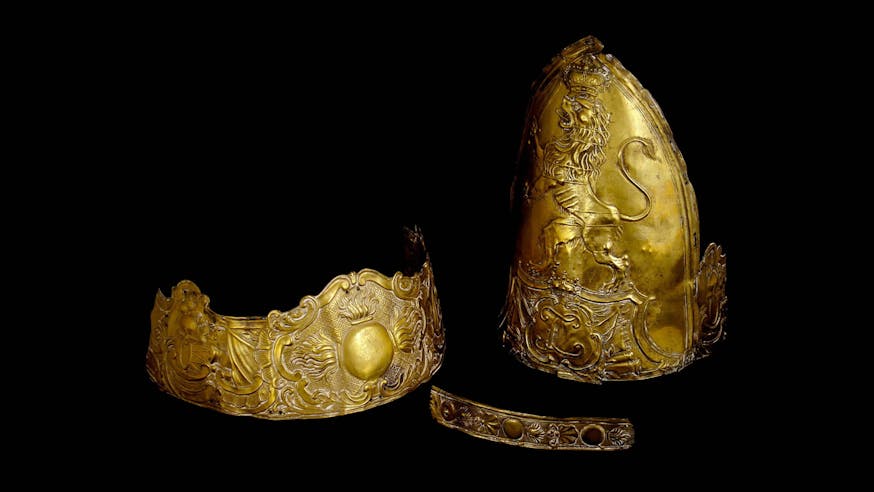
Hessian Cap Plates
These embossed metal pieces once adorned the distinctive military headgear worn by Hessian fusiliers — specialized soldiers who served under British command during the Revolutionary War.
Episode Four: Conquer by a Drawn Game (January 1777 – February 1778)
The third year of war brings multiple defeats, but also a major victory at the Battle of Saratoga and support from France.

The Davenport Letters
The 17 surviving letters that make up the Davenport Letters were written by two young brothers from Dorchester, Massachusetts, who served in the Continental Army as soldiers during the Revolutionary War.

Washington's War Tents
Explore General George Washington's Revolutionary War tent and the handsewn, full-scale replica of his field headquarters through a virtual tour, interactive online experiences, and more.

"The March to Valley Forge"
One of the most iconic commemorative works on the American Revolution, William B. T. Trego’s "March to Valley Forge" was painted in Philadelphia and exhibited at the Pennsylvania Academy of the Fine Arts in 1883.
Episode 5: The Soul of All America (December 1777 – May 1780)
The alliance between the American colonists and the French changes the war, and the Revolution expands to the sea and to the southern colonies.
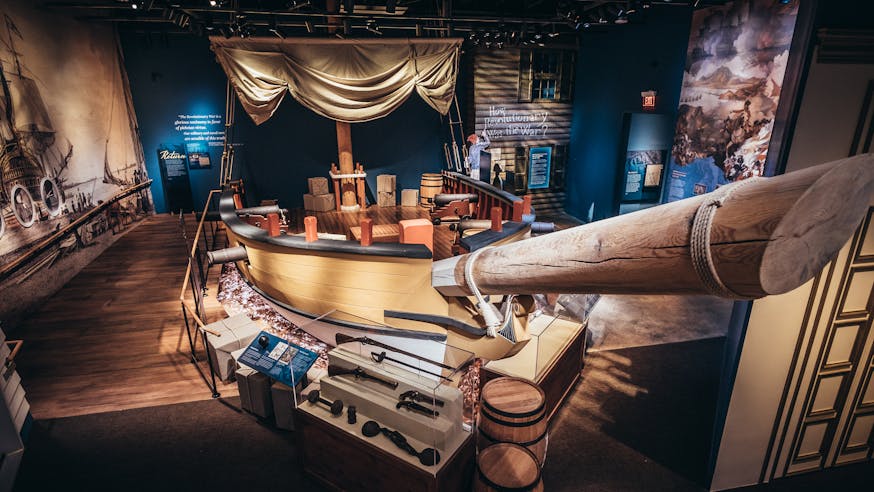
A Revolutionary War
Core ExhibitionHow Revolutionary was the war? Explore the final years of the Revolutionary War in the Museum's core galleries, from the perspectives of the diverse people who lived through it.
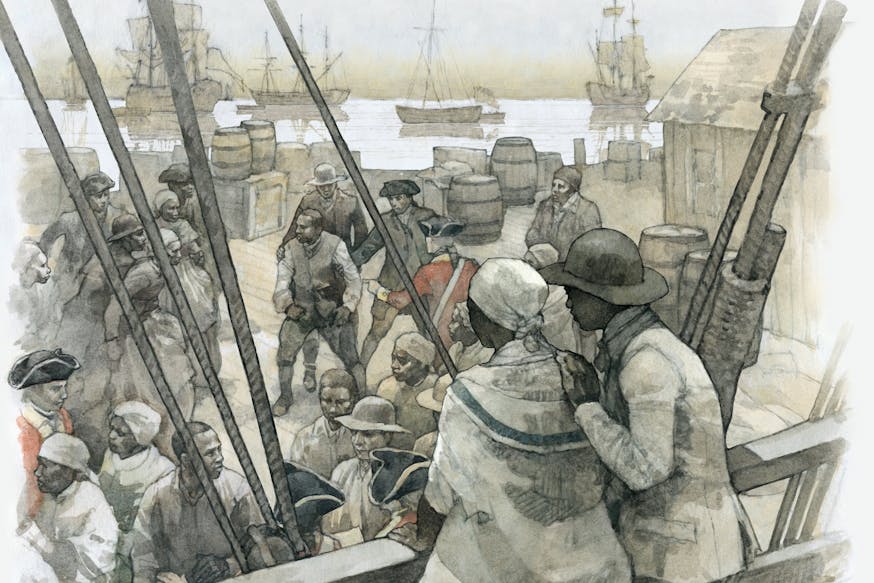
Finding Freedom
Explore the stories of five real people of African descent living in war-torn Virginia in 1781.

Joseph Plumb Martin's Memoir
In June 1776, 15-year-old Joseph Plumb Martin left his home in Connecticut and joined the Continental Army. As an elderly man, Martin wrote a detailed memoir about his experiences at places such as West Point, Constitution Island, Yorktown, Monmouth, and Valley Forge.
Episode 6: The Most Sacred Thing (May 1780 – Onward)
The Continental Army defeats the British at Yorktown, ending the war and leaving Americans to create a new nation.

A New Nation
Core ExhibitionWhat kind of nation did the Revolution create? In the Museum's core galleries, learn how The Revolutionaries succeeded in gaining independence, but then came the immense task of creating a nation founded on the principles of life, liberty, and the pursuit of happiness.
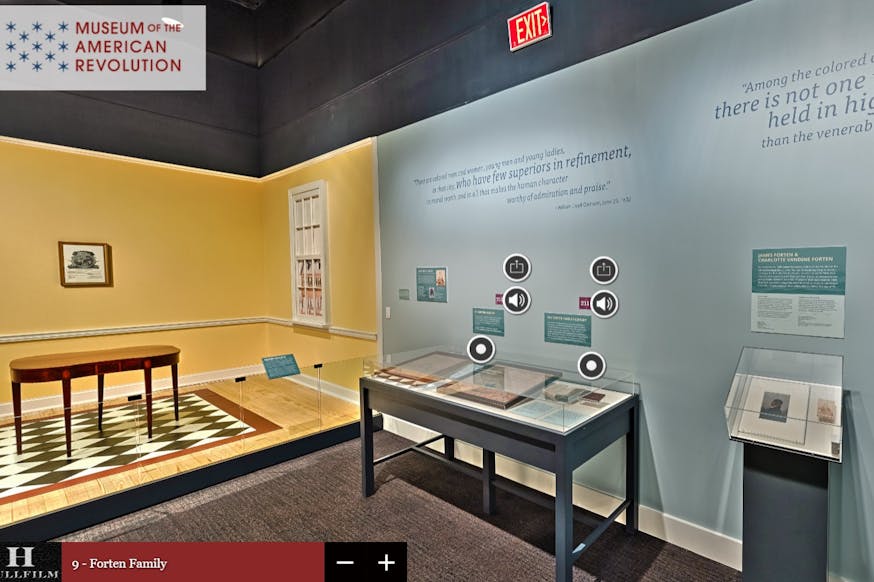
Black Founders
Immerse yourself in 360-degree panoramic gallery images, high-resolution photos of the artifacts and documents, and a guided audio tour to explore the story of free Black Philadelphian James Forten and his descendants.

Jeremiah Keeler's Hangar (Sword)
This hangar belonged to Sergeant Jeremiah Keeler, who served at the Siege of Yorktown in 1781, and was given to him by the Marquis de Lafayette.