

Revolutionary Legacy and Ensuring the Promises of the American Revolution Endure
The Revolutionary generation fought and sacrificed for the promises of liberty, equality, and self-government. As heirs to that — still enduring yet unfulfilled — Revolutionary legacy, how do we apply it to our lives? How do we make sure that the promises of the Revolution live on?
Dr. Philip Mead, now formerly the Museum’s Chief Historian, discussed the enormous responsibility of American citizens to improve our system of government, ensure our rights, and make sure that we protect each other’s rights.
The Revolutionary generation fought for an ideal best expressed in the Declaration of Independence: we hold these truths to be self-evident that all men are created equal, that they are endowed by their creator with certain inalienable rights, among which are life, liberty, and the pursuit of happiness.
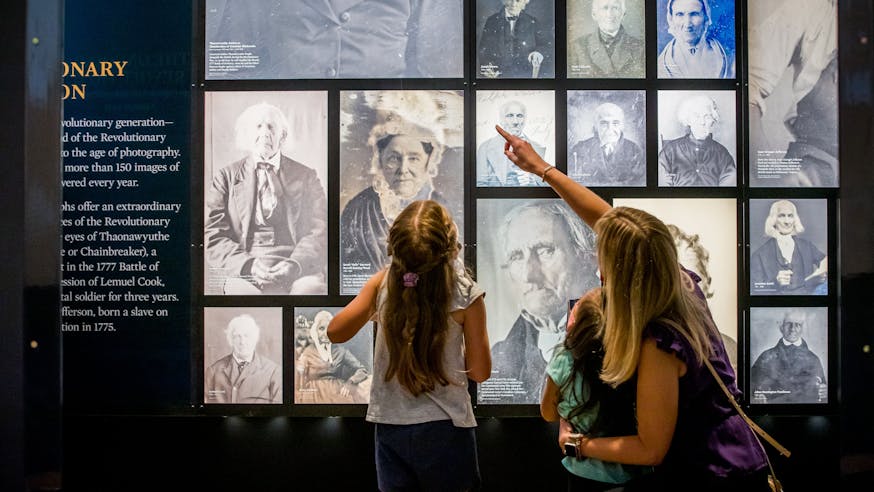
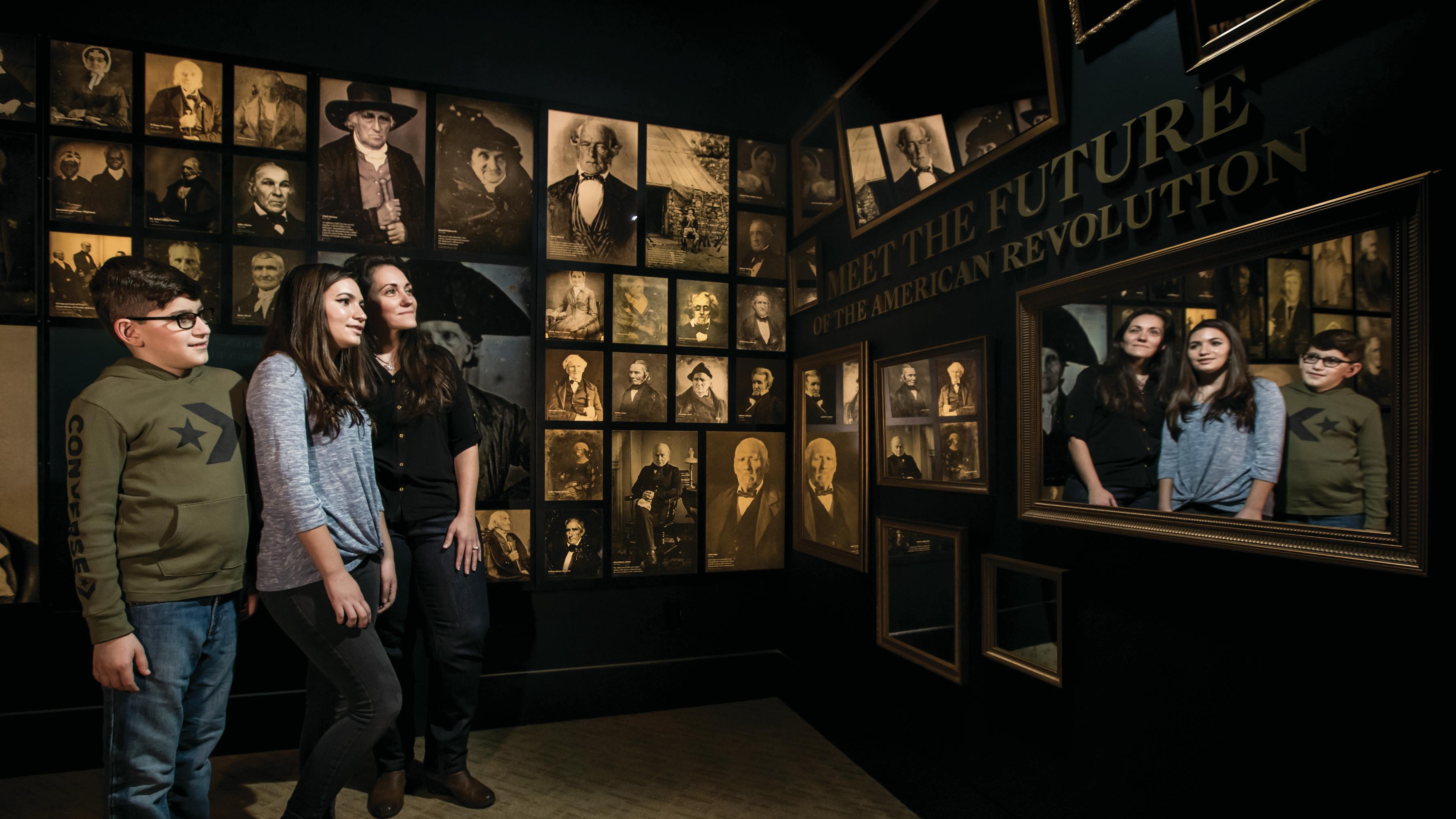
Behind Mead in the Museum’s award-winning core exhibition are photographs of more than 70 members of that generation who fought and sacrificed for the American Revolution. These are people who were soldiers; people who were children living through the disruption of war, of disease spread by the movement of troops; people whose families were disrupted and torn apart by civil war. That generation, in remarkable numbers, lived into the age of photography. As members of that generation aged, people were eager to capture their images and preserve their spirit. How would they do that? How would they make sure that the revolution lived on beyond the lives of these people?
On July 10, 1858, Abraham Lincoln answered that in an address in Chicago. He said the waves of immigrants who were coming to the American shores — in their risk taking, in their aspirations to experience the pure free breath of revolution — were themselves the blood of the blood and flesh of the flesh of the revolutionaries. He said even though they could find no family tie or direct connection to that original generation, they believed in those same ideas. When they, as he put it, read our old Declaration of Independence and found in it the same moral principle, they too are American Revolutionaries.
That is the electric cord in that Declaration that links the hearts of patriotic and liberty-loving men together, that will link those patriotic hearts as long as the love of freedom exists in the minds of men throughout the world.Abraham Lincoln on July 10, 1858
We, and every generation that has come between Lincoln and us today, carry on that legacy as American Revolutionaries, according to Mead. Now the question is how do we apply that legacy? What are our responsibilities to expand and improve our system of government, ensure our rights, and make sure that we protect each other's rights as a community?
That's the final question asked in the Museum’s galleries. In front of a large set of mirrors, people can look at themselves and reflect on what an enormous responsibility that is, and what an open-ended question it is for us. What are we going to do with that amazing legacy?
It's in that vein that we ask people to “meet the future of the American Revolution.” It's up to each and every one of us to decide what that future will look like.
Learn More
Virtual Museum Tour
Plan Your Visit