

Native American Interpretive Program
Learn more about the Museum of the American Revolution's Native American Interpretive Program, which explores the voices, viewpoints, experiences, contributions, and legacies of Native Americans during the Revolutionary era and their relevance today through living history interpretation.
The Museum's Native American Interpretive Program is sponsored by Comcast.
About the Program
Discover the work of the Native American Interpretive Program to expand the Museum's capacity to explore Native American involvement in the American Revolution through living history programming.

Goals & Objectives
Building on the Museum’s existing core exhibition content programming, the Native American Interpretive Program will expand our capacity to research, develop, and deliver programs about Native American experiences in the Revolution, to nurture and expand community relationships, and to facilitate public discussions of current events using deep historical context. To achieve its objectives, the Native American Interpretive Program's core initiatives include establishing an advisory committee, Meet the Revolution interpreters-in-residence, and programming throughout Indigenous Peoples Weekend and Native American Heritage Month.
Primary Initiatives
Read more about four primary intiatives of the Native American Interpretive Program.
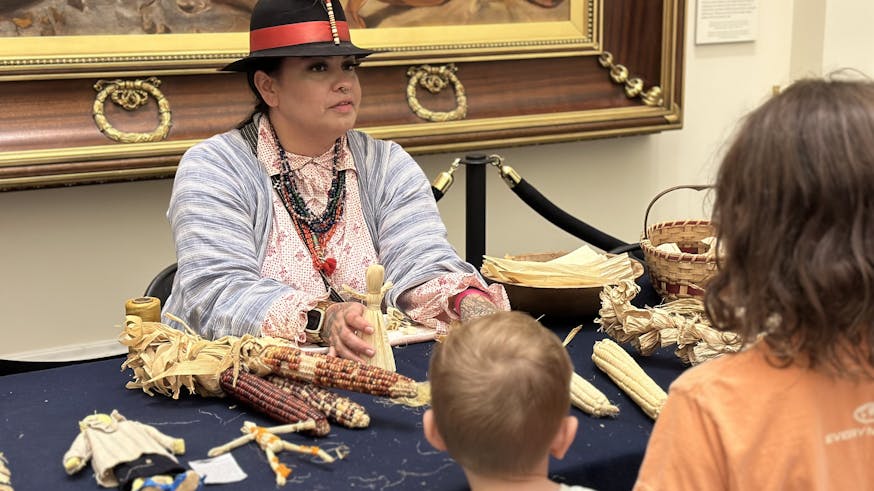
Meet the Revolution

Advisory Committee
In order to provide guidance and ensure a broad representation of input from indigenous communities, the advisory committee consists of representatives of Federally recognized tribal nations across the United States. Current advisory council members include Kody Grant (Isleta Pueblo/Eastern Band of Cherokee Indians), Belinda Patterson (Tuscarora White Bear Clan), and Jeremy Johnson (Lenape).

Indigenous Peoples Weekend
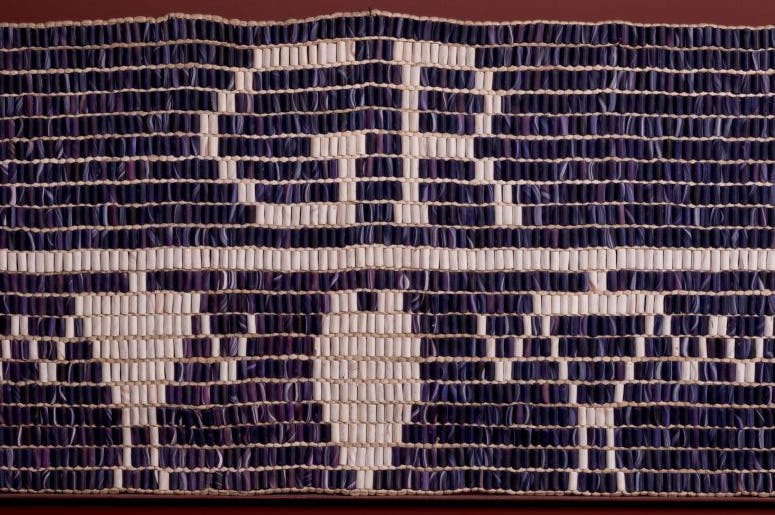
Each October, the Museum explores Native American history, culture, and their role in the American Revolution at our annual Indigenous Peoples Weekend celebration. Past events have included traditional Haudenosaunee and Lenape social dances, costumed living history interpretation, beadwork and wampum belt demonstrations, and more.

Native American Heritage Month
Each November, the Museum has marked Native American Heritage Month with special in-gallery talks and activities, including discovery carts of replica handling objects about Akiatonharónkwen (Louis Cook) and Tyonajanegen (Two Kettles Together), talks about the Oneida Nation's decision to side with the Revolutionary cause, wampum belt crafts, and more.
For more information about the Museum's Native American Interpretive Program, please contact [email protected].
Related Resources
Discover additional digital resources exploring the lives and experiences of Native American people during the Revolutionary era.
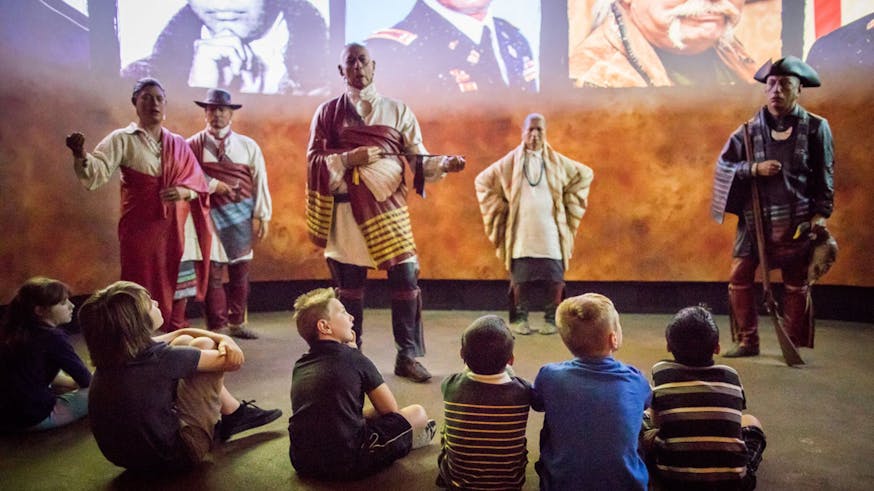
Meet the Figures: Oneida Nation Theater
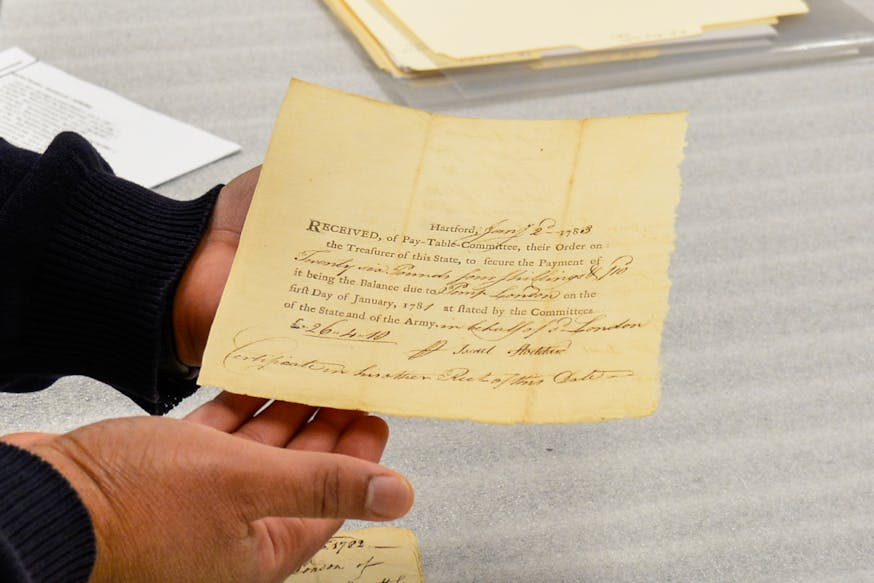
Patriots of Color Archive

Memory Wars

Native Americans in the Revolutionary Era
More than 250,000 Native Americans lived east of the Mississippi River during the Revolutionary era. They formed more than 80 nations and spoke dozens of languages. The decades of political turmoil and warfare that divided Great Britain and its colonies and led to the creation of the United States profoundly affected native people. Explore their stories throughout the Museum with this gallery guide.
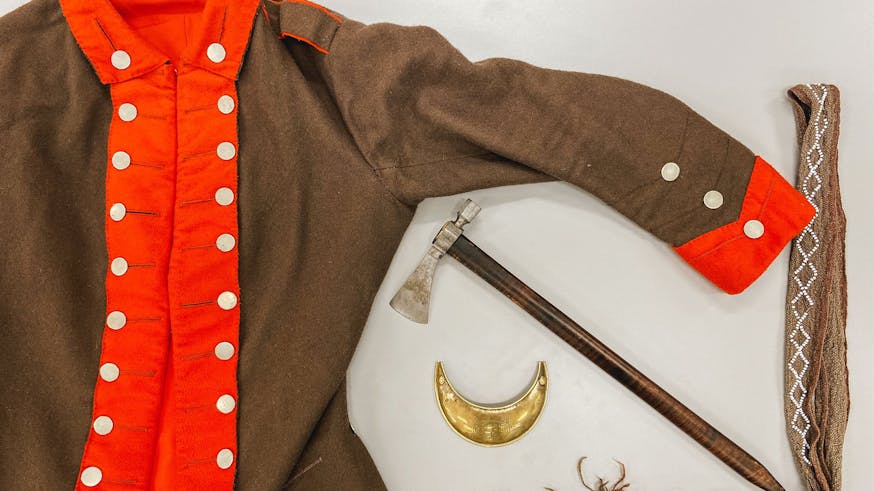
Louis Cook Discovery Cart