



A Guide to the Museum of the American Revolution for FIFA World Cup Visitors in 2026
The American Revolution ignited in the 13 colonies, but since then, its events, documents, and legacy have had a lasting global impact. During the 250th anniversary year of the Declaration of Independence in 2026, the Museum of the American Revolution offers a variety of ways for onsite and online visitors to experience and understand the ongoing influence the Revolution has had on the world. With the FIFA World Cup and the over a dozen games being played in the Mid-Atlantic Region, the Museum’s galleries, shop, and online resources provide visitors from competing countries the chance to see themselves as part of the ongoing Revolution. Find out more below!
Resources for International Visitors
The Museum routinely welcomes and engages visitors from around the globe.
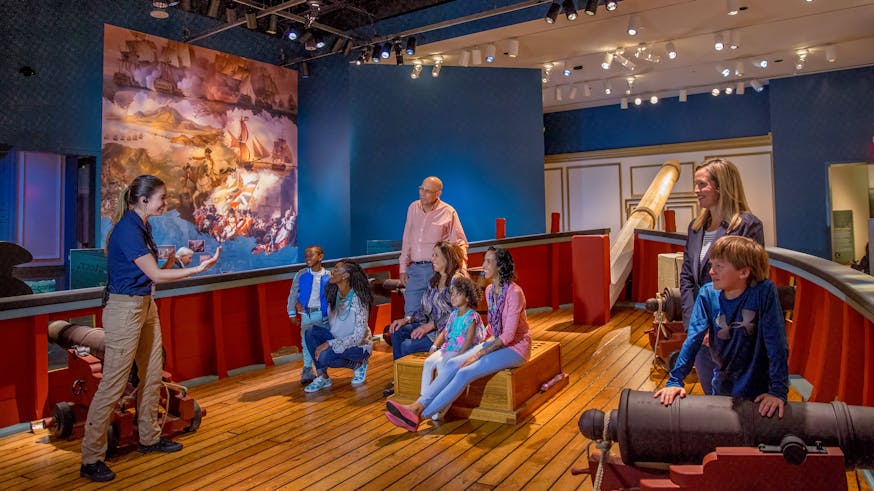
Tours, Guides & Maps
Our core exhibition audio tour is available in English, Spanish, and French. With the English version narrated by the Museum’s President and CEO Dr. R. Scott Stephenson, visitors can listen on a sanitized, Museum-issued devices available to pick up at the front desk as well as pre-purchased with admission. Audio tours are $3 for Members, $4 for groups, and $5 for general public with regular admission.

The Declaration’s Journey
October 18, 2025 - January 3, 2027The Museum’s current special exhibition, The Declaration’s Journey, also has an audio tour available (with transcriptions) in English, Spanish, French, German, Mandarin Chinese, and Vietnamese.

Museum Map
Maps of the Museum are available at the front desk in English, Spanish, French, Italian, German, Vietnamese, Mandarin Chinese, and Japanese.
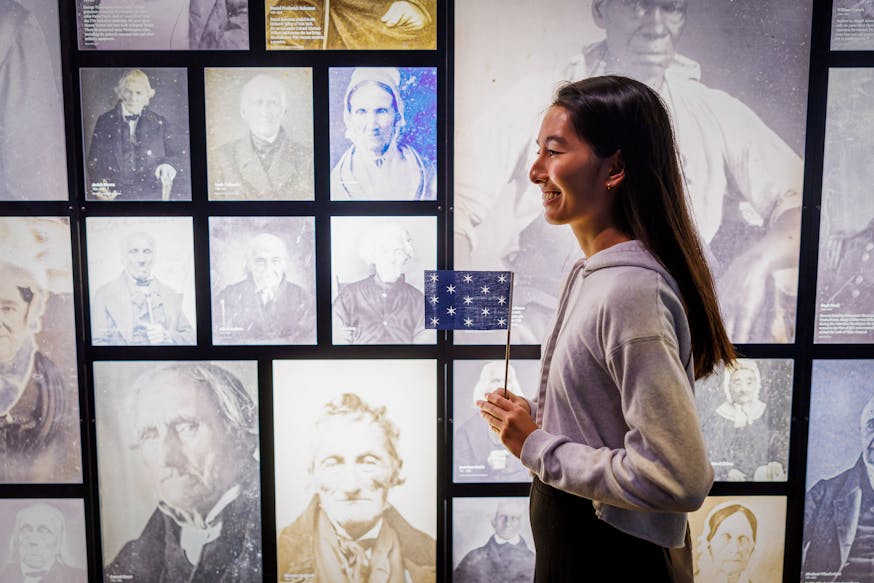
Frequently Asked Questions
The Museum also offers resources for kids and families, as well as people with disabilities, including mobility and sensory needs, as well as those who are deaf, hard of hearing, blind, or low vision.
In-Gallery Highlights for Visitors from Competing Countries
The Museum has something for everyone visiting for the FIFA World Cup, but explore below for information on objects or stories from our galleries that are related to a competing country.

England
Almost every one of our galleries highlights England in some way, whether with 18th-century weaponry or objects related to everyday life in what was once British North America.
In our Rule Britannia! 1760-1765 gallery space, view a fireback that, though made in New Jersey, bears the Royal Arms of King George II. Firebacks served both practical and decorative purposes in the homes of colonial Americans, radiating heat and protecting brick while also showcasing status and allegiances. Similarly, household items like teapots bore political messaging, like a teapot made in England on view in our American Liberties: 1765-1775 gallery space. It is painted with “No Cyder Act” on one side and “Apples at Liberty” on the other, allowing its owner to make their view about a contentious British tax known. In that same gallery and also made in England, find a mug and a shirt buckle referencing slogans and symbols related to English journalist and politician John Wilkes. Wilkes was a vocal critic of the King and supporter of American rights. These objects use “45” to reference the 45th edition of The North Briton, in which Wilkes attacked King George III’s 1763 speech at the opening of Parliament.
France
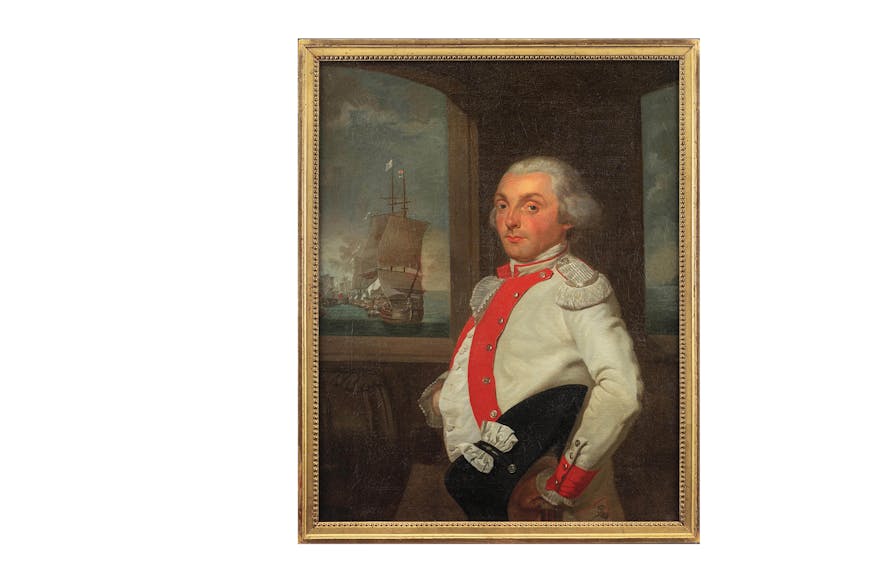
Both our core galleries and special exhibition highlight France’s role in the United States’ victory in the Revolutionary War. From the fighting at sea to the Siege of Yorktown, the Museum’s collection and loaned objects encompass remnants of war and reminders of the two countries' lasting bond. Highlights include French firearms and naval items, as well as a French Army officer's gorget, which is a vestigial piece of armor worn around the neck by European infantry officers as a sign of rank. Related to the victory at Yorktown is also the portrait of Joachim du Perron, a French Army officer who served in seven naval battles during the Revolutionary War as well as the Siege of Yorktown, and also a sword carried by a soldier in the Continental Army’s Corps of Light Infantry led by the Marquis de Lafayette. Carried by Sergeant Jeremiah Keeler of Connecticut, Lafayette purchased the sword while he was in France during the winter of 1779-1780 and brought dozens like it back to arm American troops.
Germany
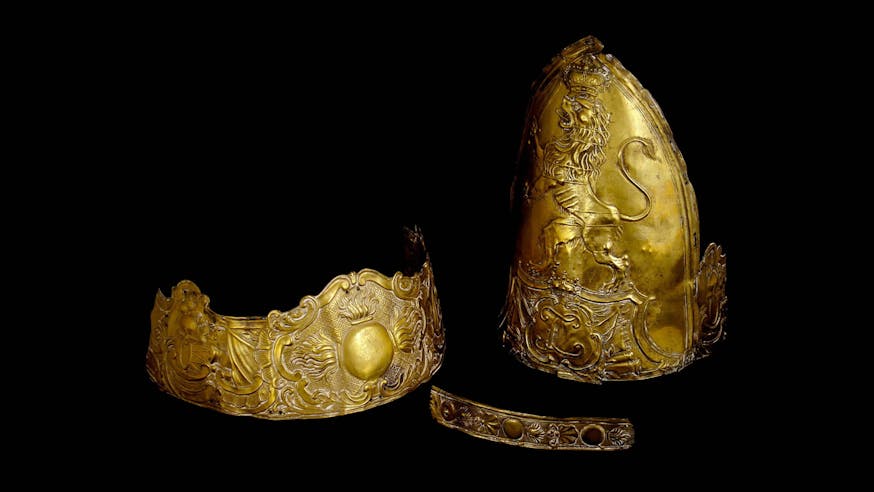
The Museum’s core galleries tell the stories of German soldiers fighting on both sides of the Revolutionary War. Most notably were the Hessians, or the 30,000 German-speaking soldiers from the principalities of Hesse-Kassel, Hesse-Hanau, Anhalt-Zerbst, Anspach-Bayreuth, Waldeck, and Brunswick hired by the British government to serve in America. The Museum has specific displays, a tableau, and objects related to these Hessian troops, including embossed metal pieces that once adorned the distinctive military headgear of these soldiers, and which were recovered in 1915 during dredging operations in the Delaware River near Philadelphia.
The Declaration's Journey


Shop Highlights
The Museum’s onsite and online shop extend the Museum experience beyond our galleries. This includes featuring a curated selection of books, home goods, and apparel relevant to people from across the world who helped shape out burgeoning nation.

GERMANY — The Christopher Ludwick Cookie Mold in our Shop celebrates the legacy of Ludwick, the "Gingerbread Baker of the American Revolution" and a German immigrant. Inspired by 18th-century techniques, Ludwick supplied gingerbread and other provisions to George Washington's Army, prized for their durability and flavor. Our one-sided version is modeled after the larger original two-sided mold that is in the Museum's collection. This reproduction mold honors Ludwick’s skill and patriotism, giving bakers and history enthusiasts a tangible connection to colonial American culinary traditions.

HAITI — The shop features multiple books on Haitian history, including I Have Avenged America: Jean-Jacques Dessalines and Haiti’s Fight for Freedom by Julia Gaffield.

HAITI and BRAZIL — Coffee Nation by Michelle Craig McDonald traces the transformative commodity of coffee from Caribbean and South American plantations through colonial coffeehouses to the thriving import-export businesses of the nineteenth-century United States.

Wrap yourself in World Cup spirit with this commemorative scarf bearing the Museum's name. Whether you're joining us in Philadelphia and cheering from the stands or displaying your passion at home, this piece connects global soccer excitement with American heritage.
Online Highlights
If you're not able to be here for the matches, you can explore online resources related to these teams and interpretation in our galleries.
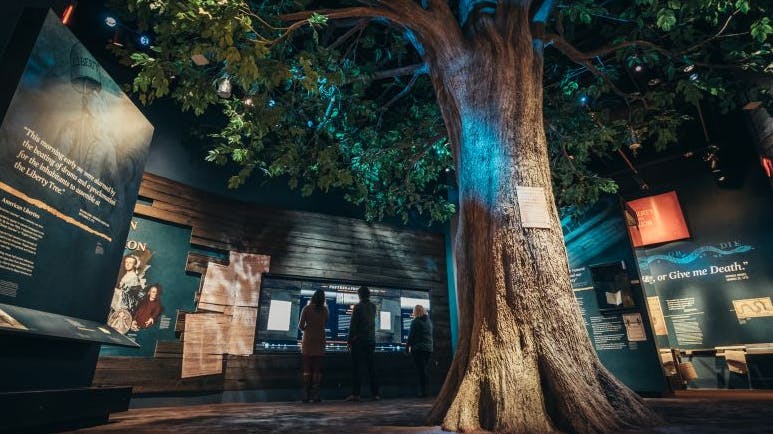
Virtual Museum Tour
The Museum’s core galleries highlight King George III, as well as the experiences of British soldiers during the Revolutionary War. The core galleries can be viewed online in the Museum’s 360-Degree Virtual Tour.

The Declaration's Journey Virtual Tour
Immerse yourself in 360-degree panoramic gallery images, high-resolution photos of the art and artifacts, and a guided audio tour of The Declaration's Journey, a special exhibition that explores the story of the 250-year international legacy of the Declaration of Independence.
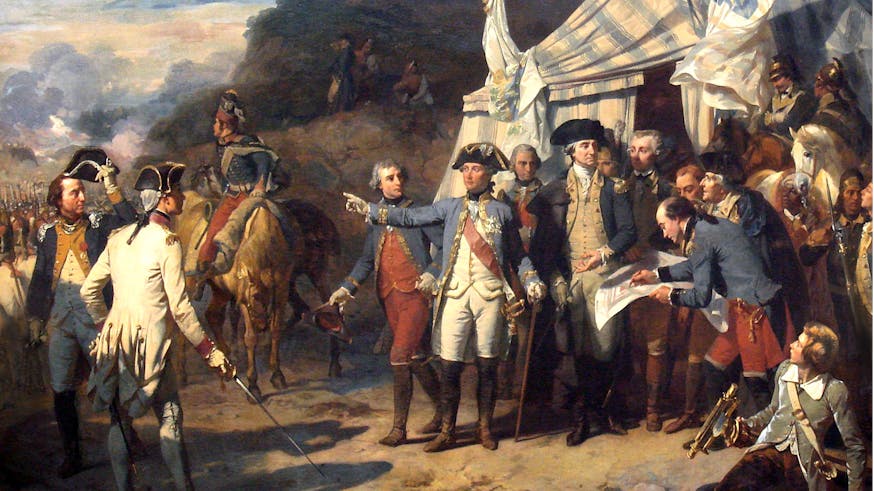
France and the American Revolution
The Revolution Around the World series features an essay on the role France played in the American Revolution.

Proof of Service
The online interactive Proof of Service displays the wartime papers of Samuel Gerock, who served in the German Regiment of the Continental Army.

Germany and the American Revolution
The Revolution Around the World series also features an essay on the role Germany played in the American Revolution.

The Declaration Around the World: Haiti
An essay related to The Declaration’s Journey, written by historian Julia Gaffield, explores the story of the Haitian revolution.