

Read the Revolution
Michael Fabriczy Kováts: A Hungarian Hussar Officer on Two Continents
July 16, 2025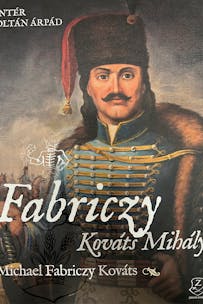
On the field of battle outside Charleston, South Carolina, on May 11, 1779, a distinguished Hungarian cavalry officer lost his life fighting for the cause of American independence. Nearly two years earlier, in 1777, Michael (or Mihály) Kováts de Fabriczy arrived in the United States after offering his military expertise to the fledgling nation via a letter to Benjamin Franklin. Kováts had years of experience serving in the Prussian Army of Frederick the Great, and he felt that his knowledge of warfare could be useful to the American Revolutionaries. Kováts’s story, which is not widely known today, is a reminder of the ethnic diversity of Washington’s army.
Michael Fabriczy Kováts: A Hungarian Hussar Officer on Two Continents by Hungarian historian Zoltán Árpád Pintér is the first new scholarly biography of Kováts published in nearly 40 years. Pintér’s dual-language (Hungarian and English) book sheds light on Kováts’s early life in Hungary, as well as his rise through the ranks as a cavalry officer in Europe. Pintér highlights the renowned role of the “hussar,” a type of light cavalry which originated in Hungary but was deployed by various European armies of the 1700s. Kováts and Polish-born officer Casimir (or Kazimierz) Pulaski introduced the hussar tradition to Washington’s Continental Army. Together, Kováts and Pulaski led Pulaski’s Legion, a combined force of cavalry and infantry. Both of these European men died fighting the British Army in the American South in 1779, but the memory of their contributions to American independence lives on.
Read an excerpt from Michael Fabriczy Kováts about Kováts’s initial struggles, due in part to the language barrier he faced, to secure an officer’s commission in the Continental Army.
Related Content

Excerpt
In early 1778, exactly on 9th January at the beginning of their stay in Trenton, Pułaski sent another letter to Washington, requesting the Commander-in-Chief to have the position of cavalry trainer filled:
“I have the honour to assure your Excellency that the Cavalry is in want of every article. It must be exercised and taught the service from the Colonel to the private. Colonel Kolatch (sic!) is a man of great merit and deserves the Charge of Master of Exercises; he’s an officer worthy of research and exclusive of a thorough knowledge of his abilities request his being employed by your Excellency. I can recommend him and assure your Excellency will never have reason to repent your confidence in him, if this proposal should be agreeable to your excellency, the sooner I am informed the better as he will be of infinite service to the Cavalry this winter in Quarters… Trenton, January 9, 1778.”
When this letter was written, Kováts was in the service of Pułaski still as a retired Major of the Austrian army though already titled as a Colonel by the Polish commander. This letter makes it also clear that Kováts was already in the process of organizing the cavalry as a branch for Pułaski at that time, and thus the Count only wanted to obtain Washington’s subsequent approval for work that was already going on smoothly. However, Washington did not give his ex-post approval easily at all. In the reply of the Commander-in-Chief dated 14th January 1778, a very special procedure can be tracked in connection with the appointment of Kováts. Within the same letter, Washington rejects the appointment of Kováts in his first opinion, and then, by simply striking through this section in the letter, he briefly approves the appointment of Mihály Kováts as a training officer.
“Your letter of the 9th [January] was delivered to me yesterday. (…)
[…]
As so much has been said of the Character and abilities of Mr Crovatch [Kováts], I have no objection to his being engaged in the capacity of Exercise Master for a few months; at the same time I must caution you against a fondness for introducing foreigners into the Service; their ignorance of the Language of the Country and of the genius and manners of the people, frequently occasion difficulties and disgust which we should not run the risqué of, unless it be in favour of extraordinary Talents and good Qualities.”
The letter expresses the same suspicion and distrust of Washington to Kováts, which was explained in his letter to Congress, dated 31st July 1777. The Commander-in-Chief’s letter contains a rumbling instruction even for Washington-favoured Pułaski, not to mention the fact the promotion of Kováts to Colonel, to which the Polish Count referred in his 9th January letter, was out of the question at the time. Kováts’ appointment as temporary training master, and thus a change in Washington’s opinion, can be understood from the entry on the fourth page of Colonel Henry Lutterloh’s letter to Lieutenant Colonel John Laurens, written on 14th January 1778:
“Yesterday I received a letter from General Pulaski (…) he wishes allow to have that famous Colonel Covats, who served all that War with such a distinction (…) under the King of Prussia (…) Pulaski wants him as his Exercising Master. He will be better for this than the Frenchmen (…) who did never serve in Light Troops.”
After the difficult and temporary appointment of Kováts, the correspondence between Pułaski and Washington remained as lively as it had been before. Although Kováts or his organizing and training activities were not discussed in these letters for a few weeks, Pułaski submitted to Washington, who was at his winter headquarters, a number of recommendations that may even have been based on Kováts’ further instructions. In his letter dated 20th January 1778, Pułaski writes about the importance of providing cavalry soldiers with rum and about disciplining disobedient soldiers. His letter of 25th January is also about the lack of rum and the depleted stocks, while the letter of 31st January repeatedly mentions the dire situation of Kováts and the unsustainability of the temporary post of Exercising Master.
“It is absolutely necessary that the Cavalry have a master of exercise who should instruct the Commissioned and Non-commissioned Officers in the rules of service, as having the Command am obliged to act with precaution – but his officer actuated by different motive would remove the bad habits and correct the defects of superior officers. [To perform this task] There is an Officer now in this Country whose name is Kolach [Kováts]. I know him to have served with reputation in the Prussian service and assure your Excellency that he is every was equal to this undertaken.”
Sign Up
Get biweekly Read the Revolution featured excerpts right to your inbox.
On 4th February 1778, to achieve his own promotion to colonel and perpetuation as a training officer Kováts personally wrote (or dictated) a letter to Washington in Easton, apparently with the knowledge of the Polish Count but bypassing him. In the extremely concise letter written in perfect English, he informs the Commander-in-Chief with an itemized statement of the cavalry equipment purchased at a good price, presenting quantitative and budgetary terms, thus emphasizing his own capacity. Interestingly, on the same day, on 4th February, Pułaski also sent Washington a letter written in Trenton. This time, undoubtedly without an interpreter, in extremely poor English, he raised Kováts’ case again and for the umpteenth time underpinned with several statements on the results in establishing the cavalry:
“If you recollect the first letters I wrote, particularly the Article of the Horses end about the Commission for Colonel Kowaer [Kováts] with Authoryty to Comend a detachement as a Colonel hi wil bi of more Sarvices in on Attack as in other Duty…”
The continuous flow of nearly aggressive letters to the Commander-in-Chief, almost demanding the appointment of Kováts, indicate that the training of the cavalry had been over by February 1778. However, Count Pułaski ended up in an impasse not only in terms of the promotion of Mihály Kováts to colonel. According to his correspondence with Commander-in-Chief Washington, they came into conflict on other personnel issues, on further recruitment, uniforms, and the amount of payment. The continuous disagreements led to a spat that took place at the end of February.
On the night of 28th February 1778, the young Polish Count clashed with an American officer of the Continental Army, General Anthony Wayne, in Burlington amid fighting. In a letter, then written in French, i. e. written in his own handwriting, with an English translation, the Polish cavalry commander explained that his five months of experience at the command of the cavalry proved that this position did not meet his expectations. The English-speaking subordinate officers – perhaps a hint at General Wayne – did not understand the foreign commander who spoke poor English, which had already had an impact on discipline and the course of the campaign. The Count recommended that Washington allowed him to establish his own Free Unit. On 19th March, Pułaski also formally resigned from the command of the cavalry in front of Congress. The close camaraderie-in arms between Kováts and Pułaski is underlined by the fact that, according to a certain letter written in Yorktown, dated 19th March, 1778, the Count recommended Kováts to Washington as his subordinate officer:
“I would recommend an experienced officer called Kováts as my subordinate, who had commanded a Free Unit and been a colonel in Prussian service!”
With the arrival of spring, war events gained new momentum. Count Pułaski, who was also forced to prove himself because of his previous organizational results and attention to his resignation, must have wanted to have the best officers next to him on the battlefield. Based on the circumstances, it is known that the letters consecutively sent to Washington eventually came to fruition. In a letter dated 9th April 1778 by George Washington, read to Congress on 18th April, the Commander-in-Chief made proposals for the officer corps of the Legion to be commanded by Pułaski. Accordingly, on 18th April 1778, the Congressional Committee, acting jointly with General Washington, promoted Michael de Kowatz to Colonel Commandant, French Count Julius de Montfort to Major, and John de Zieliński to Captain.”
Zoltán Árpád Pintér, Michael Fabriczy Kováts: A Hungarian Hussar Officer on Two Continents (Budapest: Zrinyi Publishing House, 2021), 179-185.
Learn More

Banners of Liberty: An Exhibition of Original Revolutionary War Flags
April 19 - August 10, 2025
Revolution Around the World