



Read the Revolution
Battle Flags of the Wars for North America, 1754–1783
March 26, 2025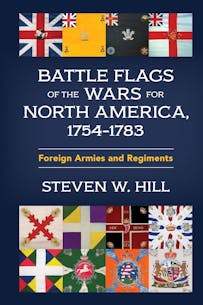
Purchase the book from Stackpole Books.
One of the quintessential images of armies during the era of the American Revolutionary War is of soldiers marching into battle under the banners of their country. However, each European army that participated in the war did things a bit differently based on cultural and historical traditions that were proudly represented on their flags (also known as colors). Battle Flags of the Wars for North America, 1754–1783: Foreign Armies and Regiments, Steven W. Hill’s first volume in a series studying the flags of all major combatants, highlights the armies that came to North America from Europe to participate in the Seven Years’ War and the American Revolutionary War.
The detailed study of each individual regiment that served on the continent during the course of these two wars highlights the similarities and differences not only between nationality, but even between regiments of the same army. The Spanish, French, German, and British soldiers who fought in America all took their uses of banners from the European traditions of knightly symbols and ancient military standards. However, loyalties as well as motivations for war were displayed differently between each of these armies. For example, during the Seven Years’ War, British regiments carried two colors together — one for the king, and the other for the colonel and his regiment. On the contrary, French regiments would carry their drapeaux in an unstandardized fashion, with one battalion of the larger regiment carrying the white standard of the monarch, and the two to four other battalions carrying identical regimental colors.
Hill’s forthcoming work in his series on flags will discuss the Continental Army and Revolutionary militia.
Related Content

Excerpt
The term "colors" derives from the traditions of heraldry, where a knight in full armor, or members of his retinue, could be identified literally by the colors on their shields, their tunics, their horse dressings, and the like. When regiments and then entire national armies began to be uniformed in distinctive clothing of various colors, individual regiments came to be identified by the colors of the flags flying above them. In various internal wars in Britain in the seventeenth century, whole sections of an army were defined by the colors of their flags and sometimes their sashes and other individual accoutrements. On the continent, regiments raised by nobles or corporate entities such as cities or cantons began to use flags based on the colors of the nobles or corporations who paid for them. With the rise of national armies, regimental colors became much more regulated and generally settled on traditional colors or symbols of the nations to which they belonged. By the time of the period of this study, virtually all regimental colors had strong national designs and motifs that readily identified their unit's national origins, if not the monarch or armies they were currently serving.
Steven W. Hill Battle Flags of the Wars for North America, 1754–1783: Foreign Armies and Regiments. (Mechanicsburg, PA: Stackpole Books, 2024) pg. XII
Sign Up
Get biweekly Read the Revolution featured excerpts right to your inbox.
Learn More

"Banners of Liberty: An Exhibition of Original Revolutionary War Flags" Public Opening Event
April 19, 2025 from 10:15 - 11 a.m.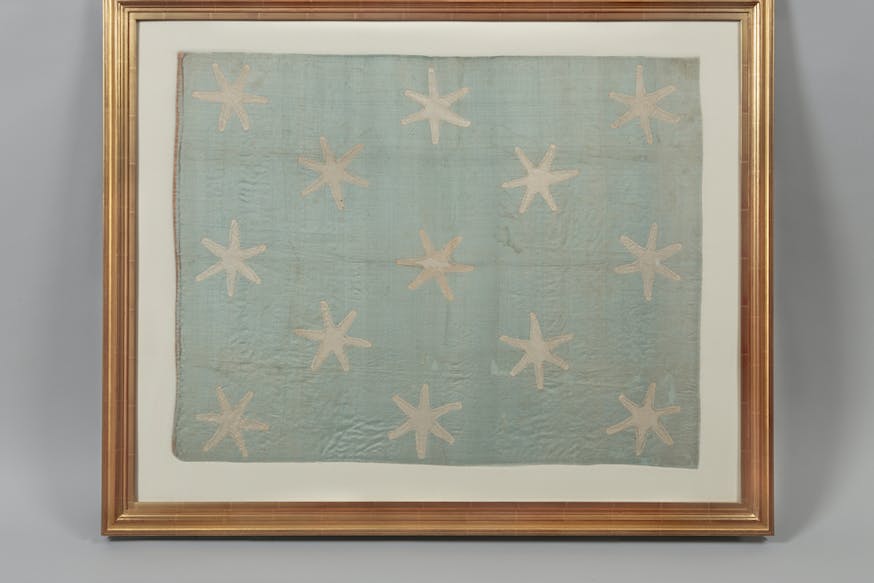
Washington's Headquarters Flag
