

Read the Revolution
Among the Powers of the Earth
October 8, 2025
While the Declaration of Independence announced America’s separation from Britain, it also served as a carefully crafted appeal to foreign audiences, asserting that the United States was entitled to the same respect as established nations. In Among the Powers of the Earth: The American Revolution and the Making of a New World Empire, historian Eliga Gould reinterprets the Revolutionary era not just as a domestic struggle for independence, but as a quest for legitimacy on the global stage. Gould stresses that the American Revolution occurred in an interconnected world of empires, trade, and diplomacy. The young United States needed more than battlefield wins; it had to convince foreign powers that it was a lawful, stable member of the international community. This required adopting European standards of diplomacy, which often complicated the Revolution’s language of equality and liberty.
Gould shows that the United States’s success in the Revolution War relied heavily on recognition from Britain’s rivals, especially France and Spain, and on proving that the United States could function as a proper nation. In this way, American diplomacy was as much about securing global acceptance as it was about rejecting British authority.
Over time, the language of the Declaration relating to natural rights and popular sovereignty, traveled far beyond the United States, inspiring independence movements in Europe, Latin America, and the Caribbean. Among the Powers of the Earth underscores that the Revolution was and is both national and international, rooted in American ideals but inseparable from global struggles over empires, legitimacy, and freedom.
Excerpt
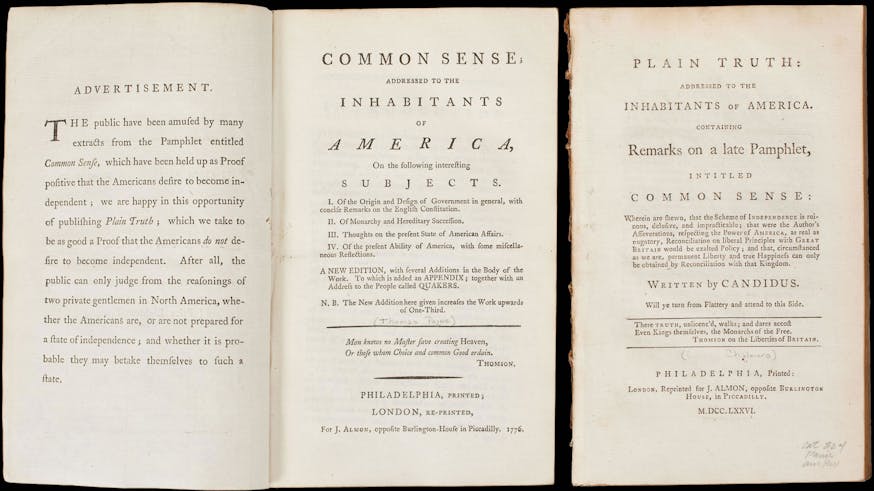
In proclaiming their nascent statehood, Americans accepted that their new governments would need to conform to the norms of Europe’s colonial powers, especially the norms enshrined in the public law of European treaties and diplomatic customs. Although the Declaration of Independence was an act of secession from Britain, it was an act of secession that Congress undertook as the “most effectual” means for “forming foreign Alliances” in Europe. “It is not choice … but necessity which calls for Independence,” observed Richard Henry Lee in laying his momentous resolution before Congress on June 7, 1776. “No state in Europe will either Treat or Trade with us so long as we consider ourselves Subjects of G. B.” Lee’s fellow Virginian Thomas Jefferson, often depicted as the founding father of American isolationism, also acknowledged the need for the United States to cultivate treaty relations with the leading states of Europe, especially those “having American territory.” Following Thomas Paine’s advice in Common Sense, most Americans assumed that once they had secured their independence from Britain, they would be well advised to steer clear of “European wars and quarrels,” yet few people—least of all Paine—thought it possible, or even desirable, to sever all ties. As Secretary of State Edmund Randolph reminded the British ambassador in 1794, Americans were “without the European circle,” but their “frequent correspondence with Europe” meant that they were entitled to the same rights and privileges as other Europeans. To suggest otherwise, Randolph insisted, would be to deny them the “modern usage of nations” because the United States “[were] sovereignties of a recent date, and in the Western hemisphere.”
As these words suggest, Americans recognized that independence was a condition that required the consent of other governments, not something that they could achieve unilaterally (or solely on their own terms). Although this was true of all nations, two things made the United States especially dependent on the good opinion of Europe’s imperial powers. The first was the Union’s origins in what the English historian Edward Gibbon called the “criminal enterprise” of rebellion. In Common Sense, Thomas Paine warned that as long as “we profess ourselves the subjects of Britain, we must, in the eye of foreign nations, be considered as rebels.” For Europe’s rulers to recognize a band of outlaws who were, by their own admission, at a war with their lawful king would be “dangerous to their peace,” wrote Paine, adding that Britain’s archrivals, France and Spain, were unlikely to come to the colonies’ assistance “until we take rank with other nations.” Nor was the declaration enough to dispel the taint of rebellion. Even after the former colonies proclaimed themselves sovereign states, their independence was, at most, a “pretended independence” without the external validation of European recognition.
Sign Up
Get biweekly Read the Revolution featured excerpts right to your inbox.
Learn More

The Declaration’s Journey
October 18, 2025 - January 3, 2027
Read the Revolution Speaker Series