

News & Updates
Now On View: John Holt Broadside and John Hancock Letter
June 26, 2026
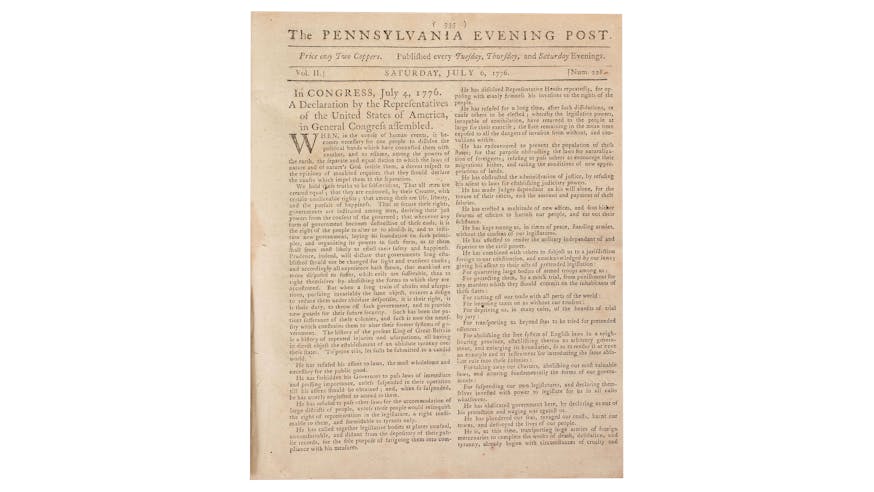
Congress declared the United States of America independent on July 2, 1776. Two days later, on July 4, it issued the Declaration of Independence to explain its break from Great Britain. The Declaration justified Congress’s actions with a list of 27 charges against King George III, dissolving the royal authority that long governed and united the colonies.
While the Declaration announced the birth of the United States, it did not create a plan for government. To re-establish law in America, the 13 states began writing constitutions. Congress also drafted the Articles of Confederation to create a national government. The Articles gave war-making and diplomatic authority to an elected Congress but reserved most powers for the states.
The Articles of Confederation were adopted by Congress in November 1777 (and officially ratified in 1781). Congress operated under the Articles from 1777 to 1789, when the Federal Constitution was adopted.
Just in time for July 4th, the Museum has added a new broadside of the Declaration of Independence and a letter from John Hancock to the Ezekiel Holt Russell broadside and reproduction Syng inkstand already on display in the Declaration of Independence gallery.
Letter
On July 8, 1776, the same day as the first public reading of the Declaration of Independence in Philadelphia, John Hancock mailed the first printings of the revolutionary document. Sending the Declaration to governors of the states, generals of the Continental Army, and foreign dignitaries was part of his duty as president of the Continental Congress. Hancock mailed this letter to Georgia and announced that “Congress have judged it necessary to dissolve all Connection between Great Britain and the American Colonies, and to declare them free and independence states, as you will perceive by the enclosed Declaration.”
Declaration of Independence Broadside
Despite the positive outcome of the Continental Congress’s motion for independence on July 2, 1776, the delegates representing New York abstained from the vote. The New York Provincial Congress did not authorize their representatives to endorse separation from Great Britain until July 9, 1776—the final colony to do so.
John Holt, a printer working in New York City, created 500 broadsides of the now-unanimous Declaration. Holt’s printing included the official statement about New York’s support for independence. Copies were sent to the Continental Congress and to government officials across New York.
Learn More
Plan Your Visit
Season of Independence